
Why Houston’s Climate Is Perfect for Termites
Houston is one of the most dynamic cities in America. But its warm, humid, and rainfall-heavy climate comes with a serious downside for homeowners. Houston’s environment is, quite simply, one of the most ideal climates for termite activity anywhere in the United States. If you own a home or business in the Greater Houston area, understanding why termites thrive here and what you can do to protect your property is not optional, it is essential.
This guide breaks down the climate factors that make Houston a termite hotspot, the species you are most likely to encounter, the warning signs every homeowner should know, and how Brooks Pest Solutions can help keep your home protected year-round.
Houston’s Climate: A Termite Paradise
Houston sits in a humid subtropical climate zone with long, hot summers, mild winters, and annual rainfall that averages over 50 inches. The city rarely experiences hard freezes, which means termite colonies never go fully dormant the way they would in colder northern states. Instead, termites in Houston remain active, feeding, and expanding their colonies throughout most of the year.
Several specific climate factors fuel termite activity in Houston:
High humidity: Termites require moisture to survive. Houston’s consistently high relative humidity often exceeds 75 percent and keeps soil moist and wood damp, creating ideal conditions for subterranean termite colonies to grow and thrive underground.
Warm temperatures: Termite colonies are most active when soil temperatures are between 60°F and 95°F. Houston sits within that range for the majority of the year, giving termites a much longer active season than most American cities.
Frequent rainfall: Heavy rainfall keeps the soil moist and softens wood, making it easier for termites to tunnel and feed. Houston’s position on the Gulf Coast also means the city is regularly affected by tropical moisture systems that bring intense, prolonged rain events.
Mild winters: Even during Houston’s coolest months, temperatures rarely drop low enough to significantly disrupt termite activity. Colonies that would die off or enter dormancy in northern climates continue feeding in Houston throughout December, January, and February.
The Texas A&M AgriLife Extension Service consistently identifies the Houston metro area and the Texas Gulf Coast as one of the highest termite pressure zones in the entire country. The financial consequences are significant, the United States Department of Agriculture (USDA) estimates that termites cause more than $5 billion in property damage annually across the United States, with a disproportionate share occurring in warm, humid Southern states like Texas.
Termite Species Found in Houston
Not all termites are the same, and Houston is home to more than one species that can threaten your property. Understanding which termites are present helps explain both the scale of the risk and why professional treatment is necessary.
Subterranean Termites
Subterranean termites are the most widespread and most destructive termite species in Houston. They live in underground colonies that can contain hundreds of thousands of workers and build pencil-sized mud tubes to travel from the soil to the wood in your home’s structure. They feed on cellulose, the primary component of wood 24 hours a day, 7 days a week, without any visible sign of activity on the surface until damage is already severe.
Formosan Termites
Formosan termites are an invasive species that has established itself across the Gulf Coast and is particularly well-suited to Houston’s climate. Sometimes called “super termites,” Formosan colonies can contain more than one million workers, dramatically larger than native subterranean termite colonies and cause structural damage at a significantly faster rate. The United States Forest Service estimates that Formosan termites alone cost the United States over $1 billion annually in damage and control expenses.
Formosan termites swarm in the evening during warm, humid nights in late spring, a sight that Houston residents in affected neighborhoods know well. A single Formosan colony can destroy a significant portion of a home’s structural wood within a few years if left untreated.
Drywood Termites
Drywood termites are less common in Houston than subterranean species but are still present and worth noting. Unlike subterranean termites, drywood termites do not need soil contact or moisture to survive. They nest entirely within dry wood, structural lumber, furniture, flooring, and window frames, and are often introduced into homes through infested secondhand furniture or building materials. Their infestations are smaller but can be harder to detect and require different treatment methods.
Warning Signs of a Termite Infestation
Termites are often called “silent destroyers” for good reason, they can be active inside your walls, floors, and foundation for years before any outwardly visible damage appears. Knowing what to look for can make the difference between catching an infestation early and facing a costly repair bill.
Mud tubes: Subterranean termites build pencil-width mud tubes along your foundation, walls, and plumbing penetrations to travel between soil and wood while retaining moisture. These tubes are one of the most reliable visible signs of active termite activity.
Swarming termites: Winged termites, called swarmers or alates, emerge from mature colonies in spring to establish new colonies. If you see swarms of winged insects around your home, especially near light sources at night and it is a strong indicator that a mature termite colony is nearby. Discarded wings near windowsills and door frames are a common post-swarm sign.
Hollow-sounding wood: Termites feed from the inside out, leaving only a thin outer layer of wood or paint intact. Tapping on wood that sounds hollow or feels soft when pressed is a warning sign that termites may be feeding inside.
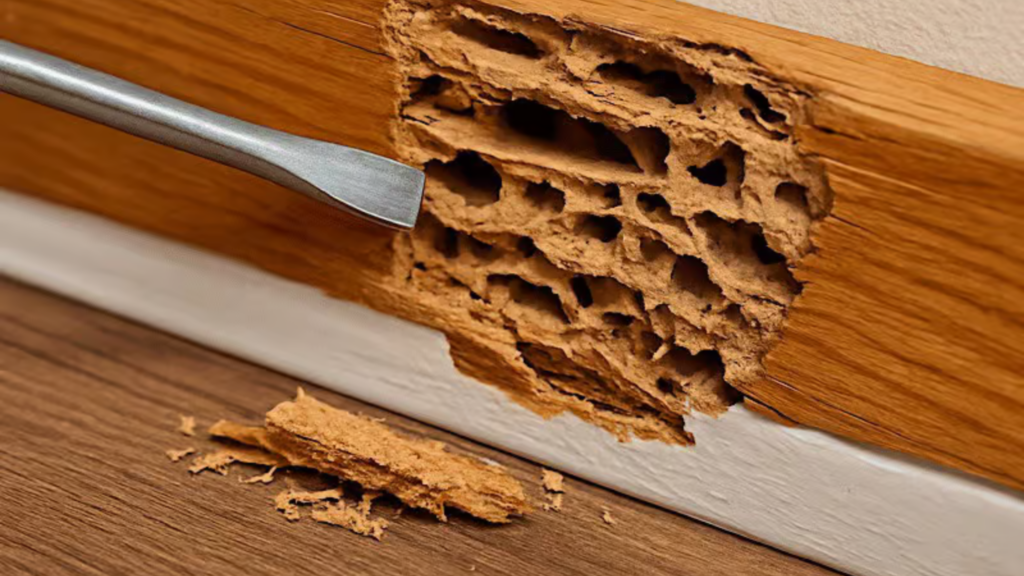
Tight-fitting doors and windows: As termites tunnel through structural wood and produce moisture while feeding, wood can warp and swell, causing doors and windows to suddenly fit tighter than before.
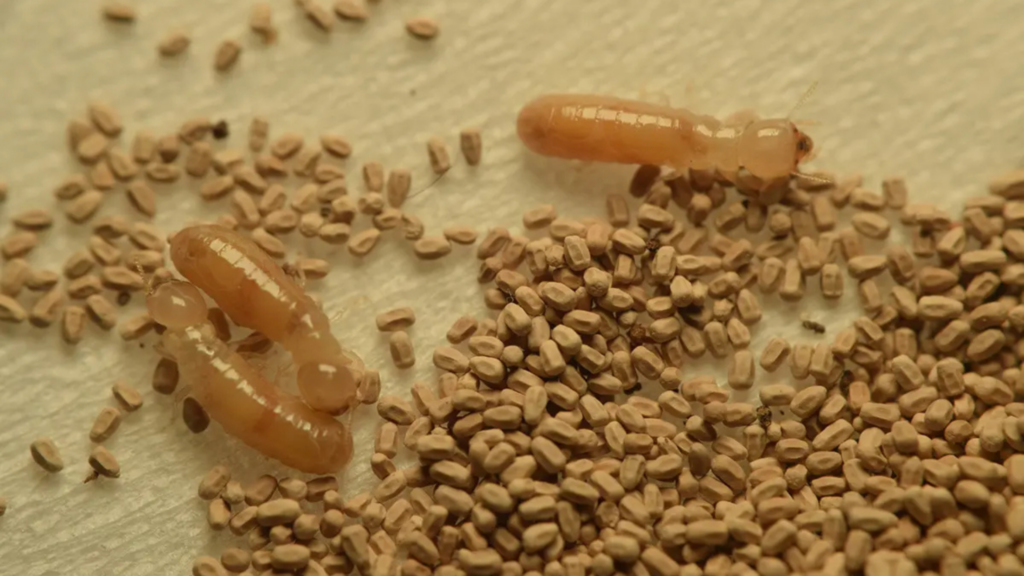
Frass: Drywood termites push their fecal pellets, called frass, out of their tunnels. Small piles of what looks like fine sawdust or coffee grounds near wood surfaces can indicate drywood termite activity.
Bubbling or peeling paint: Moisture produced by termite activity inside walls can cause paint to bubble, blister, or peel in ways that mimic water damage.
If you notice any of these signs, contact a licensed pest control professional immediately. Termite damage compounds quickly, the longer an infestation goes unaddressed, the more costly the repair.
Why Professional Termite Treatment Is Non-Negotiable in Houston
Given Houston’s climate and termite pressure, DIY termite treatments are not a realistic solution. Consumer-grade products available at hardware stores are far less concentrated than commercial-grade termiticides and rarely penetrate the soil deeply enough to create a reliable barrier around a structure. They also do not address Formosan termite colonies, which are simply too large to be controlled with over-the-counter methods.
Effective professional termite treatment in Houston includes:
Liquid soil termiticide treatments: A continuous chemical barrier is applied to the soil around and beneath your foundation, killing termites that attempt to pass through it and protecting the structure from subterranean and Formosan termite entry.
Termite bait station systems: Bait stations installed around the perimeter of your property attract foraging termites, which carry a slow-acting agent back to the colony. Over time, the entire colony is eliminated. Bait systems require ongoing professional monitoring to remain effective.
Annual termite inspections: Even with active treatments in place, annual inspections are essential to detect new termite activity, assess the condition of existing treatments, and identify changes in your property that may have created new vulnerabilities.
The Texas Department of Agriculture licenses and regulates all pest control companies operating in Texas. Always verify that your pest control provider holds a current Texas Structural Pest Control license before allowing any termite treatment on your property.
Protecting Your Houston Home from Termites
In addition to professional treatment, several proactive steps can reduce your home’s termite vulnerability:
- Eliminate wood-to-soil contact. Wood siding, door frames, and structural posts that touch the ground give subterranean termites direct access to your home. Maintain a gap between soil and all wood elements of your structure.
- Fix moisture problems. Repair leaky pipes, improve drainage around the foundation, and ensure gutters direct water away from the structure. Reducing moisture reduces termite attractiveness.
- Store firewood away from the house. Keep firewood stacked at least 20 feet from the structure and elevated off the ground.
- Reduce mulch near the foundation. Mulch retains moisture and can provide a harborage point for termites near your foundation. Keep mulch at least 6 inches away from the structure.
- Schedule annual inspections. The earlier a termite infestation is detected, the less damage it causes and the less costly it is to treat.
Brooks Pest Solutions: Houston’s Termite Protection Experts
When it comes to termite protection in Houston, you need a pest control partner who understands the local climate, the specific species present, and the level of treatment necessary to provide reliable, lasting defense. Brooks Pest Solutions delivers professional termite inspections and treatments tailored to the realities of Houston’s pest environment.
Every service begins with a comprehensive inspection of your property to identify active termite activity, moisture issues, and structural vulnerabilities. A customized treatment plan is then developed specifically for your home, using proven methods that address Houston’s unique termite pressure.
Do not wait for visible damage to take action. Contact Brooks Pest Solutions today to schedule your termite inspection and put a protection plan in place before termites make the first move.
Frequently Asked Questions About Termites in Houston
How do I know if I have termites or ants? Termite swarmers have straight antennae, equal-length wings, and a broad waist. Flying ants have elbowed antennae, unequal wings, and a narrow pinched waist. If you are unsure, a professional inspection will provide a definitive identification.
Does homeowner’s insurance cover termite damage? In most cases, no. Standard homeowner’s insurance policies typically exclude termite damage because it is considered a preventable maintenance issue. This makes proactive termite protection even more important for Houston homeowners.
How long does a termite treatment last? Liquid soil termiticide treatments typically provide protection for five or more years depending on soil conditions and the product used. Bait station systems require ongoing monitoring and maintenance. Annual inspections ensure treatments remain effective over time.