
Love Bugs in Florida: Why They Swarm and Prevention Tips
Every spring and late summer, Florida drivers brace for the same thing: clouds of small, dark insects flying in pairs, coating windshields, and leaving behind a sticky mess on car hoods. Love bugs are one of Florida’s most recognizable seasonal nuisances, and while they’re mostly harmless, understanding what draws them in can make the season a lot more manageable for your home and vehicle.
Here’s a closer look at what love bugs actually are, why they swarm the way they do, and what you can do to minimize their impact around your property.
What Are Love Bugs, Really?
Despite the name, love bugs aren’t bugs at all. They’re a species of march fly called Plecia nearctica, and according to UF/IFAS Featured Creatures, they arrived in Florida through natural migration along the Gulf Coast, not through any university lab experiment. That popular myth, which has circulated since the 1970s, claims UF researchers created love bugs to control mosquitoes and that the bugs then escaped. UF/IFAS has directly addressed this as false, but the story has stuck around for decades anyway.
Why Do Love Bugs Swarm?
The swarming behavior most people associate with love bugs is tied directly to mating. Adults emerge in massive numbers over a short window, and males and females pair up almost immediately, often remaining connected for hours or even days at a time. This is where the “love bug” name comes from in the first place.
Love bugs are also known to be drawn to vehicle exhaust, warm pavement, and light-colored or reflective surfaces, which is part of why highways, parking lots, and driveways tend to see such concentrated activity. UF/IFAS Extension has noted that love bugs have an unfortunate attraction to exhaust fumes specifically, which helps explain why roadways become such a hotspot during peak season.
When Is Love Bug Season in Florida?
Love bugs follow a predictable pattern each year, with two distinct swarming periods. According to UF/IFAS, each generation is active for roughly four to five weeks, typically appearing in April and May, then again in August and September. Outside of these windows, love bug activity drops off significantly, which is why the swarms seem to appear and disappear so abruptly each year.
Are Love Bugs Actually Harmful?
The good news is that love bugs don’t bite or sting people, and they pose no direct health risk. The bigger issue is what they leave behind. Their bodies are mildly acidic, and if they’re left on a car’s exterior too long, especially in Florida’s heat, the residue can damage paint and clear coat. Large numbers can also clog radiators and grilles on vehicles that spend a lot of time on the road during peak season.
Around the home, love bugs are mostly a nuisance rather than a structural or health concern. They can gather on light-colored siding, patios, and outdoor furniture, especially in areas that stay warm and sunny, but they don’t cause the kind of property damage associated with wood-destroying or biting pests.
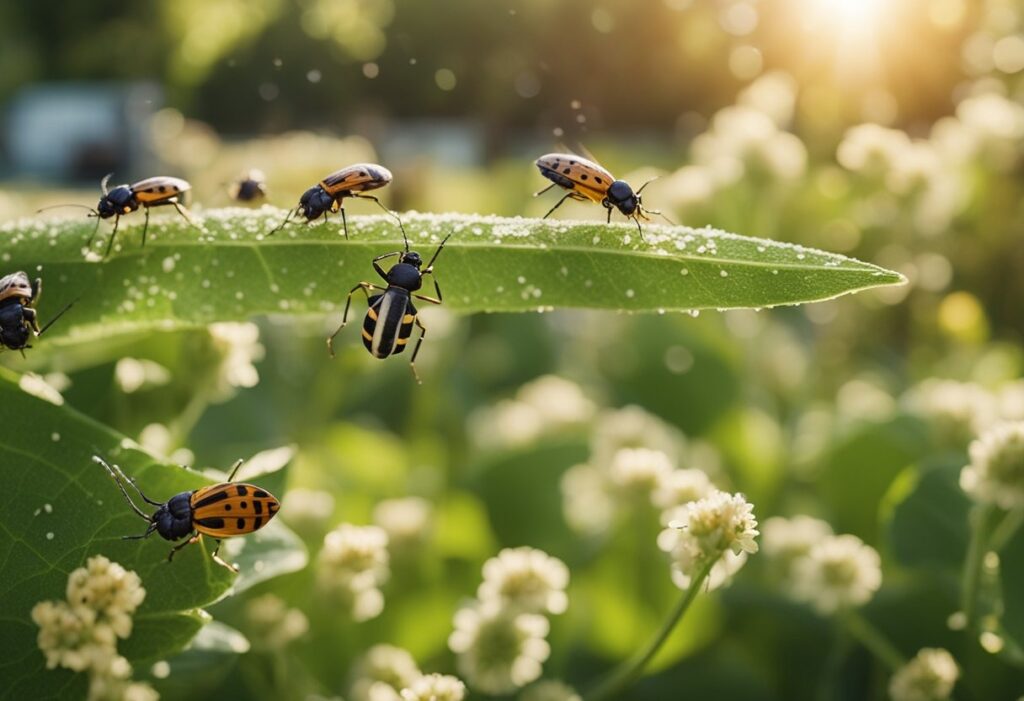
How to Keep Love Bugs Away From Your Home and Car
- Wash your car promptly. Removing love bug residue within a day or two helps prevent it from etching into paint, especially during peak Florida heat
- Adjust outdoor lighting. Since love bugs are drawn to bright, reflective surfaces, switching to yellow or warm-toned bulbs on patios and entryways can make the area less appealing.
- Limit idling near the house. Vehicle exhaust is a known attractant, so avoiding extended idling close to your home during peak season can help reduce nearby swarms.
- Keep screens in good repair. While love bugs aren’t typically indoor pests, damaged screens on doors and windows can let them (and other seasonal insects) drift inside.
- Time outdoor activities strategically. Love bugs are most active during the warmest, sunniest parts of the day and much less active in the early morning and evening.
- Rinse outdoor furniture and surfaces regularly. This keeps residue from building up on patios, railings, and light-colored siding during the height of the season.
When to Bring in Pest Control Support
Love bugs themselves aren’t typically treated with pesticides, since their swarms are short-lived and tied to a natural migration and mating cycle rather than an infestation in the traditional sense. That said, love bug season often overlaps with increased activity from other seasonal pests around Florida homes, which is where a broader pest management plan can help.
If you’re dealing with ongoing pest pressure around your property beyond love bug season, Brooks Pest Solutions offers year-round pest control services to help keep your home protected as different seasonal pests come and go throughout the year. You can learn more about our full range of services at brookspestsolutions.com.
Frequently Asked Questions About Love Bugs
Did the University of Florida really create love bugs?
No. This is a long-standing myth that UF/IFAS has directly addressed as false. Love bugs arrived in Florida through natural migration, not a lab experiment.
Do love bugs bite or sting?
No. Love bugs are harmless to people and pets in terms of physical contact. Their main impact is the residue they leave on cars and outdoor surfaces.
How long does love bug season last?
Each swarming period typically lasts around four to five weeks, occurring twice a year, generally in spring (April to May) and late summer (August to September).
Why are love bugs so attracted to roads and cars?
Love bugs are drawn to vehicle exhaust, warm pavement, and light-colored, reflective surfaces, which makes highways and parking lots common hotspots during peak season.
Can love bug damage to my car be prevented?
Washing your car soon after driving through a swarm, ideally within a day or two, significantly reduces the risk of paint damage from their acidic body residue.
Is professional pest control effective against love bugs?
Because love bug activity is short-lived and migratory, targeted treatment isn’t typically necessary. However, general pest control can help manage other seasonal pests that tend to increase around the same time of year.
Ride Out Love Bug Season With Less Hassle
Love bugs are a temporary, if frustrating, part of life in Florida, and a little preparation goes a long way toward minimizing their impact on your car and outdoor spaces. If love bug season has you thinking about your home’s broader pest protection, our team is here to help year-round.
Contact us today to learn more about year-round pest protection for your Florida home, or visit brookspestsolutions.com to get started.