
Early Warning Signs: How to Catch Termites
Termites are called the “silent destroyers” for a reason. They can hollow out the structural beams of a home for years without a single visible trace. By the time most homeowners notice, the damage can cost tens of thousands of dollars to repair and standard homeowners insurance won’t cover a cent of it.
The good news? Termites almost always leave clues. Knowing what to look for can mean the difference between a simple treatment and a major structural repair bill.
Why Early Detection Matters
A single subterranean termite colony can contain anywhere from 60,000 to over a million workers, operating 24 hours a day, 7 days a week. The U.S. EPA estimates termites cause more than $5 billion in property damage every year in the United States alone.
The typical timeline from initial infestation to visible structural damage is three to eight years. Catching them in year one — not year five — is what saves your home.
The 9 Early Warning Signs of Termites
1. Mud Tubes on Foundation Walls
Pencil-thin tunnels of dried mud running up your foundation, piers, or crawl space walls are the number one termite red flag. Subterranean termites build these to travel from soil to wood while staying moist. If you find one, do not disturb it — call a professional right away.
2. Discarded Wings Near Doors and Windows
Termite swarmers shed their wings after mating. Finding small, translucent wings piled up near windowsills, light fixtures, or door frames means a colony has recently swarmed — and may have done so inside your home.
3. Hollow-Sounding or Soft Wood
Tap along wooden beams, baseboards, or door frames with a screwdriver handle. A papery, hollow thud instead of a solid knock means termites may have eaten the wood from the inside out, leaving only a thin shell behind.
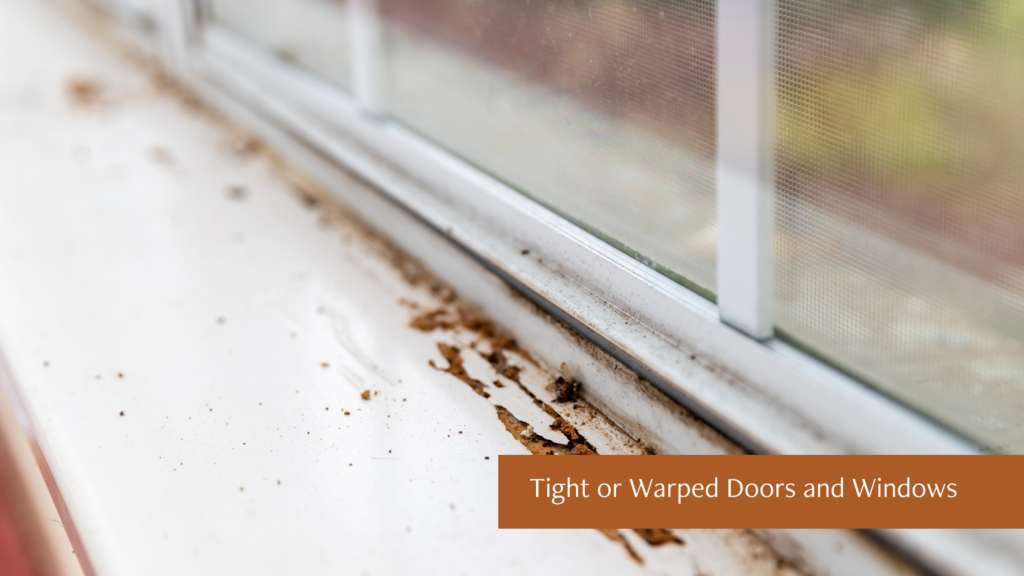
4. Tight or Warped Doors and Windows
Termite damage causes wood to warp and moisture to build up inside walls. If doors or windows that previously fit well are suddenly difficult to open or close, it could signal termite activity in the surrounding frame, not just seasonal humidity.
5. Frass (Termite Droppings)
Drywood termites push their droppings out of tiny holes in wood. These frass piles look like sawdust or coffee grounds and are typically found below infested areas or near furniture. If you see what looks like a small mound of pellets, take it seriously.
6. Buckling or Blistered Wood Floors
Floor damage that resembles water damage — blistering, buckling, or sagging sections — can actually be caused by subterranean termites feeding beneath the surface. If there’s no plumbing source for the damage, termites should be on your radar.
7. Live Termite Swarmers
Seeing winged, ant-like insects swarming around your home — especially in spring — is a strong sign of an established colony nearby. Swarmers are poor fliers and typically stay close to the colony that sent them out.
8. Water Damage Appearance Without a Water Source
Stains, bubbling paint, or peeling wallpaper that appears without any plumbing leak can indicate termite moisture buildup inside your walls. Subterranean termites carry moisture with them as they feed, leaving behind a water-damage-like trail.
9. Pin-Sized Holes in Drywall
Small exit holes in drywall or painted surfaces — often surrounded by slight discoloration — may indicate termites that have eaten through wall interiors and are very close to breaking through the surface.
Where to Look: A Quick Inspection Checklist
When walking through your home, pay special attention to these high-risk areas:
- Foundation perimeter (look for mud tubes)
- Crawl space floor joists and beams
- Garage door frames and sill plates
- Wooden deck posts and ledger boards
- Basement walls and support columns
- Window and door frames throughout the house
- Attic structural beams and rafters
- Any point where wood contacts soil directly
- Firewood stacked near the house
- Tree stumps or dead wood in the yard
Remember: a DIY check is a starting point, not a substitute for a professional inspection. Termites hide in areas you simply cannot access without the right equipment and training.
What Makes Your Home Attractive to Termites
Understanding the risk factors helps you reduce your home’s appeal.
Moisture problems are the single biggest attractant. Leaky pipes, poor drainage, clogged gutters, and poor crawl space ventilation all create the damp conditions termites need to thrive.
Wood-to-soil contact gives termites direct, hidden access to your structure. Wooden siding that touches the ground, fence posts, porch steps, and landscaping mulch piled against the foundation are all common entry points.
Previous infestation in the neighborhood significantly raises your risk. Termite colonies spread to neighboring properties — especially in older neighborhoods with mature landscaping and aging wood.
How We Treat Termites: The Sentricon® System
At Brooks Pest Solutions, we use Sentricon® with Always Active™ technology — the #1 brand in termite protection, trusted by millions of homeowners and used to protect landmarks like the White House and the Statue of Liberty.
Unlike traditional liquid barrier treatments that simply try to block termites, Sentricon attacks the problem at its source: the queen and the entire colony.
Here’s how it works: in-ground bait stations are installed around your property. Termite workers find the bait, consume it, and carry it back to the colony where it disrupts their ability to molt and grow, eventually wiping out the entire colony, including the queen.
Key benefits of Sentricon:
- Eliminates the entire colony, not just surface termites
- No drilling, no disruption to landscaping or structure
- Continuous 24/7 monitoring and protection year-round
- Safe for children, pets, and the environment
- The first termite product approved for use in U.S. national parks
What to Do If You Find Evidence of Termites
Step 1 — Don’t disturb the area. Knocking down mud tubes or poking at damaged wood can scatter the colony and make treatment harder. Leave everything in place.
Step 2 — Document what you find. Take clear photos of mud tubes, frass, damaged wood, or discarded wings. Note the location and the approximate size of the affected area.
Step 3 — Call a professional immediately. The sooner you act, the less damage occurs. Brooks Pest Solutions offers free termite inspections. Our technicians will identify the species, assess the extent of the infestation, and recommend the right treatment plan.
Prevention Tips to Reduce Your Risk Year-Round
- Fix all moisture issues promptly — leaky faucets, condensation, and poor drainage all invite termites
- Keep gutters clean and direct downspouts away from the foundation
- Eliminate all wood-to-soil contact around your property
- Store firewood elevated and at least 20 feet away from the house
- Replace wood mulch near the foundation with rubber or rock mulch
- Seal cracks and gaps in your foundation and exterior walls
- Schedule a professional termite inspection at least once per year
Don’t Wait for Structural Damage
Termites never stop eating, and the longer you wait to address the warning signs, the more expensive the repairs will be. If you have noticed mud tubes, discarded wings, or mysterious wood damage around your property, it is time to act before a small issue becomes a structural nightmare.
Reclaim Your Peace of Mind!
Click here to schedule a comprehensive termite inspection with Brooks Pest Solutions today! Let our local team catch the problem early and protect your biggest investment with reliable, family safe care.
Frequently Asked Questions
What are the very first signs of a termite infestation? The earliest signs are mud tubes on the foundation, discarded wings near windows or doors, and hollow-sounding wood. You may also notice frass — small pellets resembling sawdust — beneath baseboards or near furniture.
How fast can termites damage a house? A colony of 60,000 workers can consume about one linear foot of a 2×4 pine board in five months. Larger colonies can cause significant structural damage within one to three years, faster in warm and humid climates.
Is Sentricon safe for my family and pets? Yes. Sentricon’s active ingredient targets the biological systems of insects only. It has been used safely in millions of homes and was the first termite control product registered for use in U.S. national parks.
Does homeowners insurance cover termite damage? Generally, no. Standard policies exclude termite damage because it’s considered a preventable maintenance issue. This is exactly why early detection and active prevention are so important.
How often should I get a termite inspection? The National Pest Management Association recommends at least once per year. Homes in high-risk areas or with previous termite activity should have more frequent monitoring which is why an active Sentricon system that works 24/7 is such a smart investment.