
Common Ant Species Found in Dallas, TX Homes
Ants are one of the most persistent pest problems facing homeowners across North Texas. Dallas’s warm climate, humid summers, and mild winters create ideal conditions for several ant species to thrive both outdoors and inside homes. Whether you’ve spotted a trail of tiny ants marching across your kitchen counter or discovered a mound of loose dirt in your backyard, knowing exactly which species you’re dealing with is the first step toward getting rid of them for good.
In this guide, we’ll cover the most common ant species found in Dallas, TX homes, how to tell them apart, and what you can do to keep them from taking over your house. If you’re already dealing with an infestation, Brooks Pest Solutions’ ant control services can help you eliminate the colony at the source rather than just the ants you can see.
The Real Cost of Ignoring an Ant Problem in Dallas Homes
For Dallas homeowners, a few ants on the counter can seem like a minor annoyance, but left unaddressed, colonies rarely stay small. Carpenter ants can quietly weaken wood structures in older Dallas homes over months or years, while fire ant mounds near patios, backyards, and AC units create an ongoing sting risk for kids and pets enjoying North Texas’s long outdoor season. With Dallas’s hot summers driving ants to search out water sources, many colonies end up settling right along foundations, sprinkler lines, and flower beds close to the house. Because most of this activity happens out of sight, homeowners often don’t realize how large an established colony has become until ants start showing up indoors in noticeable numbers.
5 Common Ant Species in Dallas, TX Homes
1. Odorous House Ants
Odorous house ants are among the most frequently reported household ants in the Dallas area. They’re small, dark brown to black, and get their name from the strong, rotten-coconut smell they release when crushed. These ants nest in wall voids, under floors, and near sources of moisture, and they’re notorious for forming long foraging trails toward sugary foods and crumbs left on countertops.
2. Carpenter Ants
Carpenter ants are larger than most household ants, ranging from a quarter to half an inch long, and are typically black or a combination of black and reddish-brown. Unlike termites, carpenter ants don’t eat wood, they excavate it to build nests, which can lead to real structural damage over time if left untreated. Look for small piles of sawdust-like debris (called frass) near baseboards, window frames, or damaged wood, especially in areas with excess moisture.
3. Red Imported Fire Ants
Red imported fire ants are one of the most notorious pests in Texas, known for their aggressive behavior and painful, burning stings. They build large, dome-shaped dirt mounds in yards, along sidewalks, and near foundations, and colonies can contain hundreds of thousands of workers. Fire ants often find their way indoors near air conditioning units, electrical boxes, or foundation cracks.
4. Pavement Ants
Pavement ants are small, dark brown to black ants that get their name from their preferred nesting sites, under sidewalks, driveways, patios, and foundation slabs. Homeowners often notice small mounds of displaced soil or sand pushed up through cracks in concrete. While pavement ants are more of a nuisance than a structural threat, large colonies near a home’s foundation can eventually work their way indoors through tiny gaps.
5. Tawny Crazy Ants
Tawny crazy ants are a newer, invasive species that has been spreading rapidly across Texas. They’re reddish-brown and easy to spot by their fast, erratic movement, unlike most ants, they don’t travel in neat, organized trails. Crazy ants form massive supercolonies with multiple queens, making them especially difficult to control with typical DIY methods, and they’re known to invade electrical equipment, sometimes causing damage.
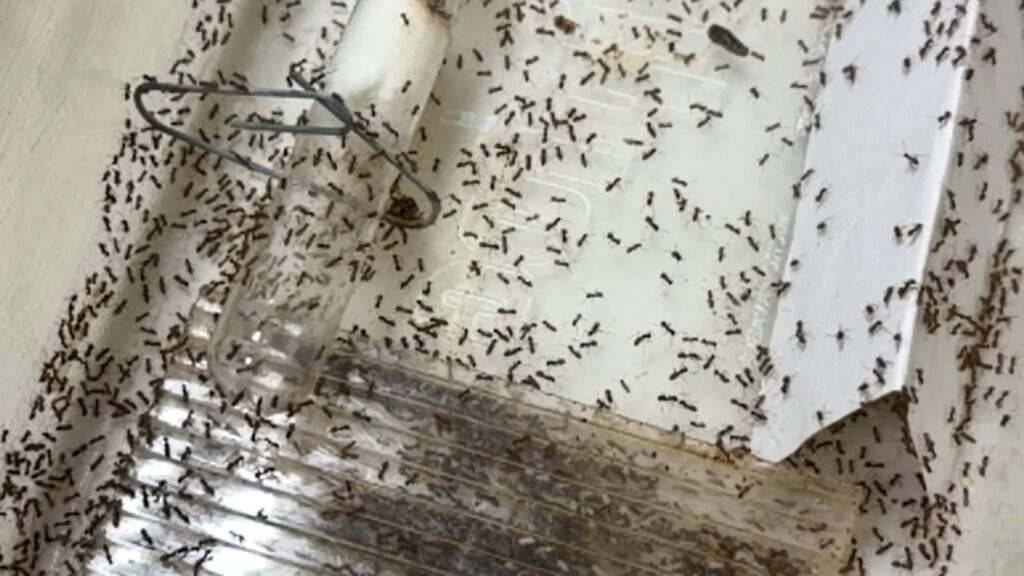
Signs of an Ant Infestation in Your Home
A few early warning signs can help you catch an ant problem before it grows into a larger one:
- Visible trails of ants along baseboards, countertops, or windowsills
- Small piles of dirt, sand, or sawdust near cracks, foundations, or wood trim
- A faint, unpleasant odor when ants are crushed
- Discarded wings near windows or doors, which can signal a nearby nest
- Rustling sounds inside walls, which may point to a larger carpenter ant colony
How to Prevent Ants From Invading Your Dallas Home
While no home is completely ant-proof, these steps can significantly reduce your risk:
- Seal entry points. Caulk cracks around windows, doors, utility lines, and foundation gaps.
- Fix moisture problems. Repair leaky pipes, faucets, and poor drainage, since most ant species are drawn to damp areas.
- Store food properly. Keep pantry items in airtight containers and wipe up crumbs and spills quickly.
- Trim landscaping. Keep tree branches, shrubs, and mulch away from direct contact with your home’s exterior.
- Clean up yard debris. Remove fallen wood, leaf piles, and standing water where colonies can establish themselves.
- Schedule regular inspections. Routine pest checks can catch small colonies before they spread.
When to Call a Professional Ant Control Company
DIY sprays and baits can knock down the ants you see, but most species build nests that are hard to reach inside walls, under slabs, or deep in the yard. Which means the colony (and the queen) often survives. A professional treatment starts with correctly identifying the species, since each one requires a different approach to eliminate effectively.
Brooks Pest Solutions’ ant control services are built around this idea: identifying exactly what’s causing the problem, treating the nest directly, and putting preventive measures in place so ants don’t come right back.
Get Rid of Ants in Your Dallas Home for Good
Ants might be small, but a colony left untreated can turn into a much bigger headache, from structural damage to painful stings to ants that just won’t quit coming back. If you’re seeing any of the warning signs above, don’t wait for the problem to grow.
Contact Brooks Pest Solutions today and let our team identify the species, treat the source, and help keep your Dallas home ant-free. Learn more about our ant control services here.
Frequently Asked Questions About Ant Control
What is the most common ant species found in Dallas, TX homes?
Odorous house ants are one of the most frequently reported indoor ant species in the Dallas-Fort Worth area, though pavement ants and fire ants are also extremely common, especially outdoors.
Are the ants in my house dangerous?
Most household ants, like odorous house ants and pavement ants, are more of a nuisance than a health risk. Fire ants, however, can deliver painful stings, and carpenter ants can cause structural damage if a colony goes untreated for a long time.
Why do I have ants even though my house is clean?
Ants aren’t only searching for food, they’re also drawn to moisture, warmth, and shelter. Even a spotless kitchen can attract ants if there’s a leaky pipe, gap in the foundation, or a nearby outdoor colony expanding indoors.
Will store-bought ant baits get rid of an infestation?
Store-bought products can reduce visible ants temporarily, but they rarely eliminate the entire colony, especially with species like carpenter ants or tawny crazy ants that have large or multiple nests. Persistent infestations typically need professional-grade treatment.
How does professional ant control work?
A licensed technician inspects your property to identify the ant species and locate nesting sites, then applies targeted treatments to the colony itself rather than just the ants that are visible. Ongoing prevention is often included to stop future activity.
How often should I schedule ant control treatments?
This depends on the severity of the infestation and the species involved, but many Dallas homeowners benefit from seasonal or quarterly treatments to stay ahead of new colonies, particularly heading into spring and summer.