
Comprehensive Guide to House Centipede Pest Control
Seeing something with too many legs scurry across your floor at lightning speed is the stuff of nightmares. If that creature has long antennae and about 15 pairs of legs, you’ve likely just encountered Scutigera coleoptrata, commonly known as the house centipede. While generally harmless to humans, their presence can be unsettling, signaling that it might be time to look into effective house centipede pest control.
This guide covers everything you need to know about these swift household pests, why they enter homes, and how to manage them effectively.
Identifying the Invader
Before diving into house centipede pest control, you need to confirm what you are dealing with. House centipedes are distinct from their garden-dwelling cousins. They are yellowish-grey with three dark stripes running down their backs. Their legs are banded with light and dark stripes.
Adults can grow up to 1.5 inches long, but their long legs make them appear much larger. Unlike millipedes, which are slow and coil up when disturbed, house centipedes are built for speed. They use this speed to hunt other pests, which brings us to an important point about their behavior.
Why are they in my House?
House centipedes are predators. If you see them frequently, it usually means there is plenty of food nearby. They feast on silverfish, firebrats, carpet beetle larvae, cockroaches, and spiders. In a way, they provide a form of natural house centipede pest control by eating other unwanted guests. However, most homeowners prefer not to trade one bug problem for another.
They thrive in damp, dark environments. You will often find them in:
- Basements
- Bathrooms
- Damp closets
- Unfinished crawl spaces
- Under sinks
Understanding that moisture and food sources attract them is the first step in successful house centipede pest control.
Immediate Treatment Methods
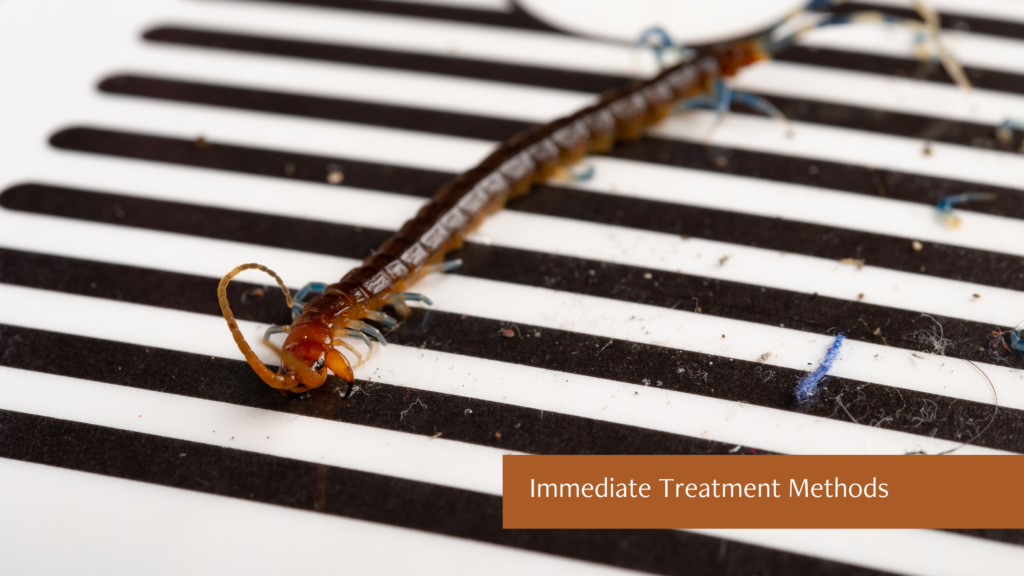
When you decide enough is enough, you need actionable steps. Physical removal is the simplest form of house centipede pest control. Because they don’t infest food or damage furniture, catching them with a jar or vacuuming them up is an effective immediate solution for individual sightings.
For larger populations, you might consider sticky traps. Placing these traps along baseboards and in corners where they travel can help reduce their numbers. It also helps you monitor how bad the infestation is, which is a crucial data point for long-term house centipede pest control.
Long-Term Prevention Strategies
The most effective house centipede pest control isn’t about killing the bugs you see; it’s about making your home inhospitable to them.
1. Moisture Control
Since these pests dehydrate easily, they need high humidity to survive.
- Run a dehumidifier: Keep basement humidity levels below 50%.
- Fix leaks: Repair leaky faucets and pipes immediately.
- Ventilate: Ensure bathrooms and attics have proper airflow.
By drying out their habitat, you force them to leave or perish, making moisture management a pillar of house centipede pest control.
2. Eliminate Their Food Source

If you get rid of the prey, the predator will follow. Implementing general pest control measures for spiders, silverfish, and roaches will naturally support your house centipede pest control efforts. Keep floors clean, seal food containers, and remove clutter where other insects might hide.
3. Seal Entry Points
Stop them from getting inside in the first place.
- Seal cracks in the foundation.
- Install door sweeps.
- Caulk gaps around windows and baseboards.
- Screen vents and floor drains.
Exclusion is often the most overlooked aspect of house centipede pest control, yet it offers the best long-term protection.
When to Call the Professionals
Sometimes, DIY methods aren’t enough. If you are seeing these creatures daily, or if you wake up to find them on your walls regularly, you likely have a larger underlying infestation. At this stage, professional house centipede pest control becomes necessary.
While they may look terrifying, house centipedes are just a symptom of a home environment that is a bit too damp and has too many other bugs. By reducing moisture and sealing your home, you can usually handle the problem on your own. However, persistent sightings suggest it is time for a more robust approach to house centipede pest control.
Don’t let creeping, crawling guests take over your peace of mind. If you are ready to reclaim your home from unwanted pests, we can help.Contact us todayfor a free inspection and expert pest control services tailored to your home’s needs.